PakseSiem Reap
Direct service
The gateway to Angkor Wat, on Laos's only crossing into Cambodia.
Laos → Cambodia · Verified 14 October 2026
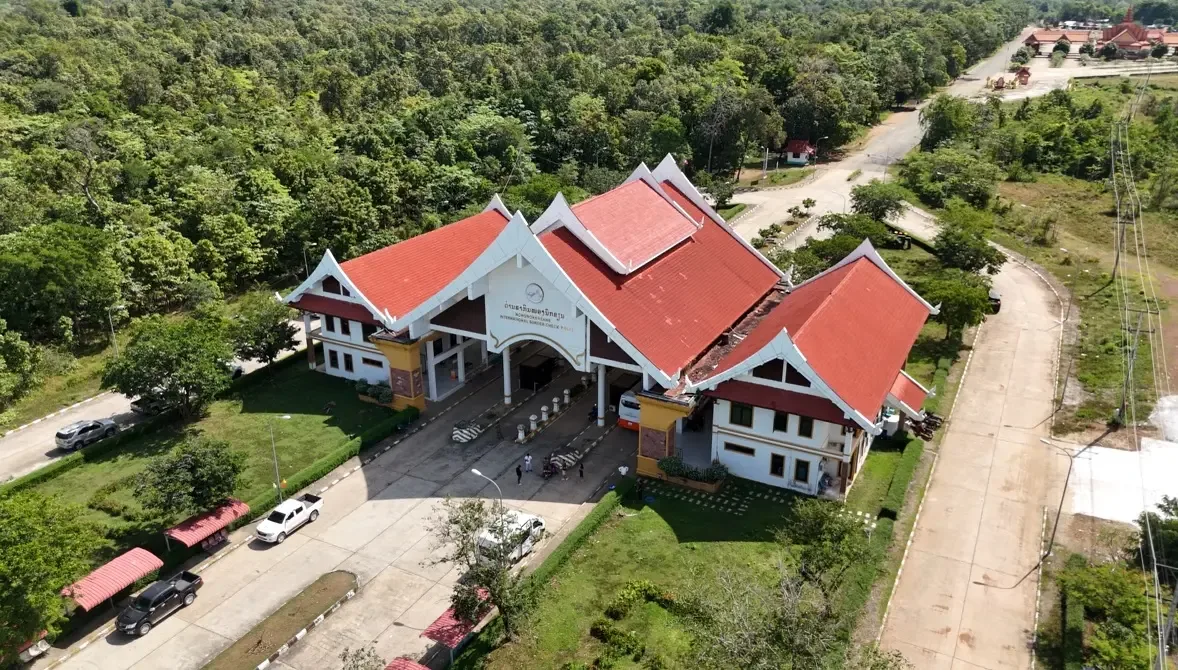
Nongnokkhene–Trapeang Kriel is the only Laos–Cambodia border open to foreigners, from 06:00 to 18:00. Buses from Pakse and the 4000 Islands continue to Stung Treng, Siem Reap and Phnom Penh, and direct flights link the two countries.
Search Laos to Cambodia routes
In the 4000 Islands district of southern Laos (Khong, Champasak), facing Stung Treng province in Cambodia. Arrive before it closes at 18:00. Both countries issue visa on arrival: about US$40 into Laos, and into Cambodia travellers in 2026 report paying US$30, as Cambodia publishes no official fee. Bring small USD notes; the Lao eVisa is not accepted.
| Crossing | Connects | Hours | Lao visa on arrival |
|---|---|---|---|
| Nongnokkhene – Trapeang Kriel Also written Veun Kham, Dom Kralor |
Khong District, Champasak Province → Trapeang Kriel, Stung Treng District, Stung Treng Province, Cambodia | 06:00–18:00 | Yes |
Bus companies, blogs and even some maps still call it Veun Kham or Dom Kralor. That is the old crossing, now local traffic only; foreigners use Nongnokkhene–Trapeang Kriel nearby.
| Item | Cost | Notes |
|---|---|---|
| Cambodia visa on arrival | US$30 reported | No official fee published; travellers in 2026 report US$30. US dollars cash, plus a passport photo |
| Cambodia e-visa | US$30 | Accepted here. Only Trapeang Kriel and Bavet take it by land |
| Lao visa on arrival | approx US$40 | Depends on nationality; +US$1 at weekends |
The unofficial fees are real
Nobody is in danger here. It is a small, quiet post and the paperwork moves fast. But the pattern is decades old and well documented, including a specific report of a traveller refusing the fee and having their passport handed back unstamped rather than being given a receipt (GT-Rider border reports). Bring small USD notes, know the real prices above, and do not hand your passport to anyone outside the official counter.
Settled: the Lao eVisa does not work at Nongnokkhene
The official Lao register listed the Lao eVisa as valid here until early September 2026, while Travelfish and multiple traveller reports said all along it was not accepted and that visa on arrival was the only thing that worked. Checked directly against the register on 9 September 2026, it now shows the eVisa as not available at this checkpoint too, matching what travellers had been reporting. Carry USD cash for visa on arrival, it is the only reliable route in. The change is dated in the transport updates log.
One crossing, one road, the same bus in both directions. What changes is which visa you buy and which unofficial fees you meet.
The e-visa costs US$30; Cambodia publishes no visa-on-arrival fee, and travellers in 2026 report paying the same US$30 in US dollars. Trapeang Kriel is one of only two Cambodian land checkpoints that accept the e-visa, so unusually you have a real choice here; almost everywhere else overland it is visa on arrival or nothing. Watch for copycat sites charging a "handling fee" on top: the official site adds none.
Every traveller must also submit the e-Arrival form online in the 7 days before arriving, visa holders included. It is free at arrival.gov.kh, and as that site still names only the three international airports, carry a pen in case the post hands you a paper arrival card as well. Budget for informal charges at the booth too: a posted US$2 weekend and after-hours surcharge, and a US$5 "stamp" that travellers report regularly.
Small bills in USD make the booth faster either way.
Visa on arrival, around US$40, paid in US dollars in cash. Card payment is unreliable here and there is no bank at the crossing.
Do not arrive with only an eVisa: it is not accepted here (see the note above). Expect about US$2 in exit and entry stamp fees as well. The Laos visa guide lists where the eVisa does work.

Everything across this border funnels through one checkpoint and, on the Cambodian side, through Stung Treng. Understanding that makes the whole set of routes legible: Stung Treng is the hinge, and the question is only where you join and where you leave. With every Thailand–Cambodia land border closed since 2025, this crossing is also the middle leg of Thailand to Cambodia overland via Laos.
Pakse to Stung Treng runs about 6 hours and is the short version of this journey, useful if you want to break it rather than sit through the whole day. Continuing to the bigger destinations, Pakse to Siem Reap, the base for Angkor Wat, is advertised at about 9 h 30 m to 10 hours (08:45 out of Pakse, about 18:15 in Siem Reap), and Pakse to Phnom Penh at 11 to 12 hours. Neither is a single vehicle for the whole way, and travellers report arriving an hour or more behind the advertised time.
Buses leave Pakse from the VIP station in town, near the Champasak Shopping Centre, not from either of the two out-of-town terminals. Getting that wrong costs an hour and a tuk tuk fare. Full detail on the Pakse page.
This is the more common starting point, and the one with an extra moving part: you begin on an island. Don Det and Don Khon have no road access, so every journey starts with a boat to Ban Nakasang on the mainland, where the buses leave from. Build that crossing and the walk up to the road into your timing.
From there, 4000 Islands to Stung Treng is 4 to 5 hours, and Siem Reap is advertised at about 8 hours, Phnom Penh at 9 to 10, shorter than from Pakse, because you start further south. Allow time for the boat to the mainland: it is the leg that makes people miss their bus.
Book 4000 Islands to Siem Reap
On the Cambodian side, Stung Treng's buses, the roads on to Siem Reap and Phnom Penh, and Cambodia's visa rules for this crossing are in the Cambodia–Laos border guide on CambodiaTransportGuide, and the Siem Reap transport guide picks up from there.
Northbound the same routes run in reverse, with one difference that matters more than anything about the schedule: arrive at the border before 18:00. The Cambodian side runs later than the Lao side, and it is the Lao closing time that ends your day. Coming up from Siem Reap or Phnom Penh on a run advertised at 8 to 12 hours, any delay eats directly into that margin.
Plan for the Lao visa to be a cash transaction: there is no ATM at the border.
The border paperwork is often not the slow part. Recent passengers on Don Det to Siem Reap and Pakse to Siem Reap report delays from waiting for other passengers, consolidating groups and changing vans after the border, so one to several extra hours is possible: avoid a tight same-day connection at the other end. There is no reliable ATM at the border either, so have the cash you need for the visa, food and onward transport ready before you leave Pakse, Nakasong or Don Det.
Through-tickets and the "your bus already left" problem
Book a through-ticket for the full journey before you go. It costs little more and it removes the classic problem at this border: being told your onward bus "already left" once you are across and have no leverage. Expect the vehicle to change at the checkpoint regardless of what you booked, because a through-ticket is a contract for the journey, not for one bus.
Flights skip the border post and the long road. October 2026 schedules, fares on the dates we checked:
Other routes and fares are on flights to Laos.
The gateway to Angkor Wat, on Laos's only crossing into Cambodia.
The same crossing as the Siem Reap service, continuing south to the Cambodian capital.
The short version of this crossing, useful for breaking the longer Siem Reap or Phnom Penh journey.
Starts right at the border, shaving hours off the same journey from Pakse.
The shortest leg across this border, often paired with an onward bus the same day.
Starts closer to the crossing than the Pakse service, for travellers already based in the islands.

Laos Bus Tickets
Written and maintained from Vientiane. The people behind this site have lived in Laos for two decades and cross these borders themselves. Routes and visa rules get rechecked whenever something changes, not on a fixed schedule that lets stale information sit for months.