VientianeVang Vieng
The gateway to Vang Vieng's karst scenery, and the shortest hop on the Laos–China Railway.
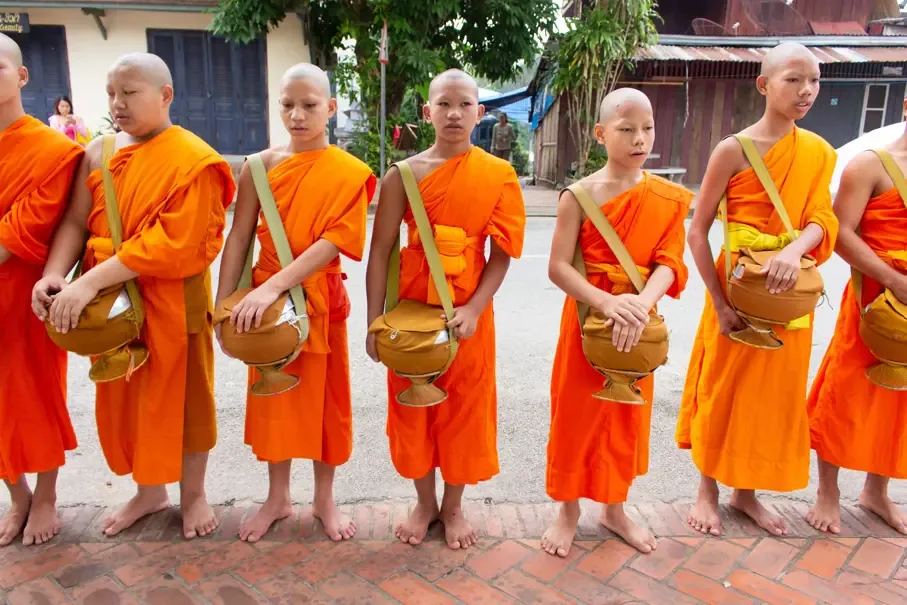
Inside Laos · Verified 14 October 2026
Most routes in Laos start in Vientiane. North to Vang Vieng and Luang Prabang, the train is much faster than the bus; south to Thakhek and Pakse, you take the bus, or fly to Pakse.
Search domestic routes
The train wins north of Vientiane: under two hours to Luang Prabang against about ten by bus. The bus still wins on price, and on the southern run to Pakse, which the railway does not serve. Several of these corridors carry straight on across a border: Luang Prabang towards Chiang Mai and the Mekong slow boat, Vientiane towards Bangkok or Hanoi.
The gateway to Vang Vieng's karst scenery, and the shortest hop on the Laos–China Railway.
The country's best-connected long-haul run, with an overnight VIP bus alongside the much faster railway.
The overnight route south, ending near Wat Phou's Khmer ruins and the Bolaven Plateau's coffee country.
The route into the Thakhek Loop, one of Laos's best-known motorbike circuits.
Links the country's two most-visited towns, with karst scenery continuing most of the way.
The road ends here; the Nam Ou river takes over for the boat trip north to Muang Ngoi.
Pi Mai, Lao New Year in mid-April, moves most of the country at once, book main routes several days ahead. The wet season, roughly May to October, mainly affects the mountain roads towards Vietnam, which are the most landslide-prone in the country. The Mekong corridors and the railway are largely unaffected either way.
| Holiday | When | Travel impact |
|---|---|---|
| Pi Mai (Lao New Year) | 13–15 April officially, but effects spread across 12–18 April every year | Moves most of the country at once. Book long-distance routes, especially sleepers, several days ahead. |
| Vietnamese Tết (Lunar New Year) | Late January or February, date changes every year | The week around Tết brings heavy demand and thinner schedules on every Laos–Vietnam crossing and route. Shift your date if you can. |
| Boun That Luang | Tuesday 24 November 2026 (full moon of the 12th lunar month, usually November; the date moves each year, with the trade fair and processions building through the preceding week) | Vientiane's largest festival. Expect the capital's hotels and the roads in and out of it at their most crowded of the year. |
The currency is the Lao kip, and it is the only legal tender, but in practice US dollars and Thai baht are accepted for plenty of things a traveller buys, including guesthouses and tour operators. Bus stations are the exception: at a ticket window, expect to pay kip.
Laos runs on cash outside the top end. Cards work in Vientiane hotels and in a shrinking number of places elsewhere, and not at all at a rural bus station. BCEL has the widest and most reliable ATM network, and its machines are the ones to look for outside the capital.
Per-withdrawal limits are low by regional standards, so plan on several visits rather than one large draw, and carry kip before heading anywhere small.
Keep a separate reserve of clean, unmarked US dollar notes for the land borders. Visas on arrival are priced in dollars, counters reject torn or heavily creased notes, and none of the crossings this site covers has an ATM on site.
Ride-hailing, and which apps work
Outside those cities the tuk tuk is still the way to cover the last few kilometres, and the fare is agreed before you get in, not after.
The stations and terminals themselves, not the sights, for the six places we get asked about most.
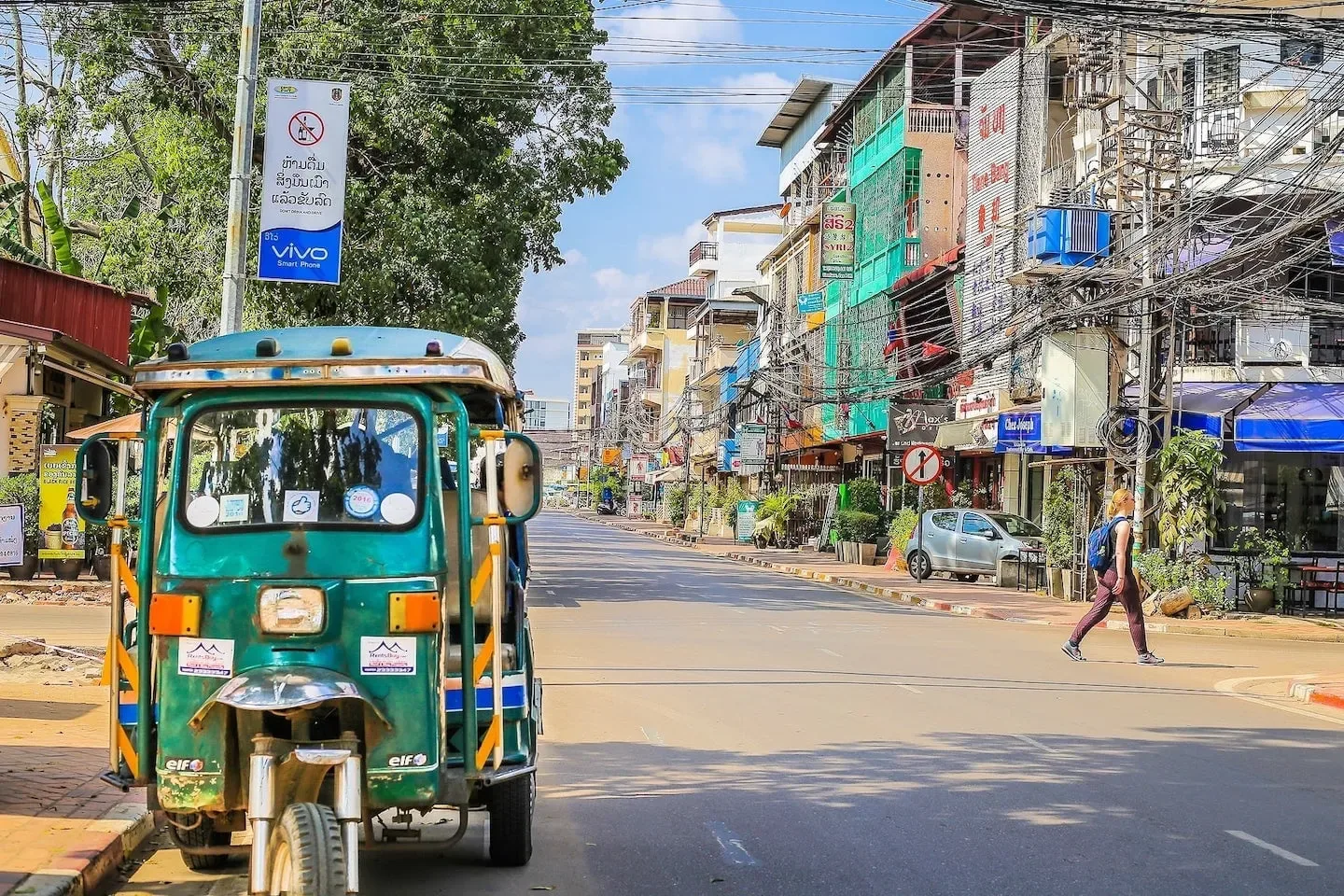 The hub for almost every routeVientianeWhich terminal for which direction, the airport, and the railway station.Getting there →
 2 stations, neither centralVang ViengWhich station, and what the ride into town costs.Getting there →
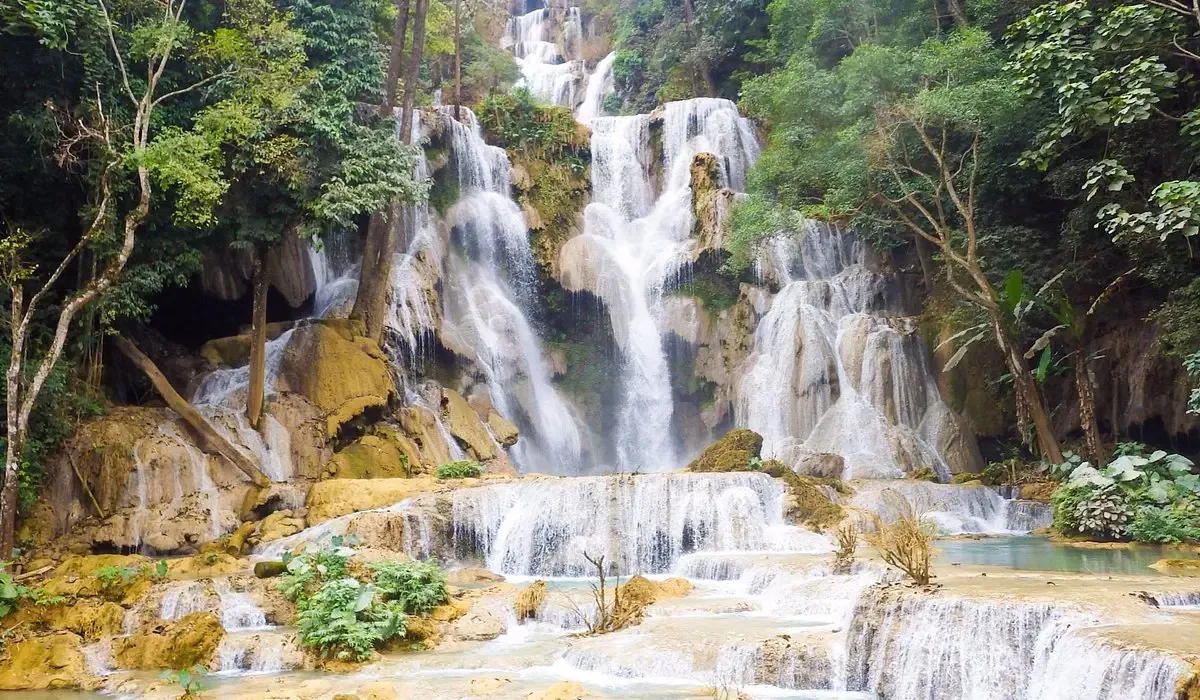 3 hubs, none in the old townLuang PrabangNorthern or southern bus station, plus the airport and the railway.Getting there →
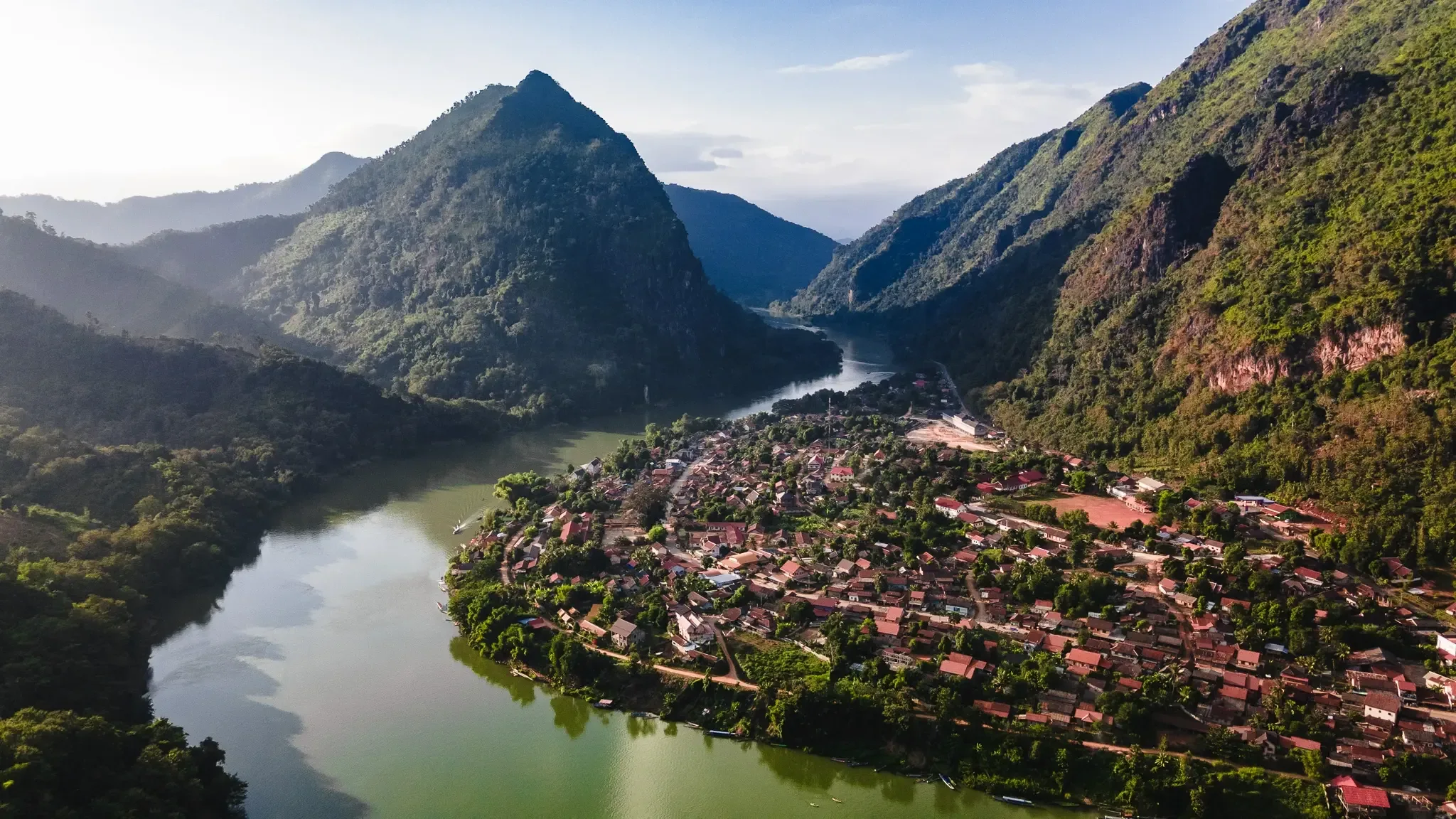 Road only, then boatNong KhiawNo airport, no railway, and the Nam Ou boat onward to Muang Ngoi.Getting there →
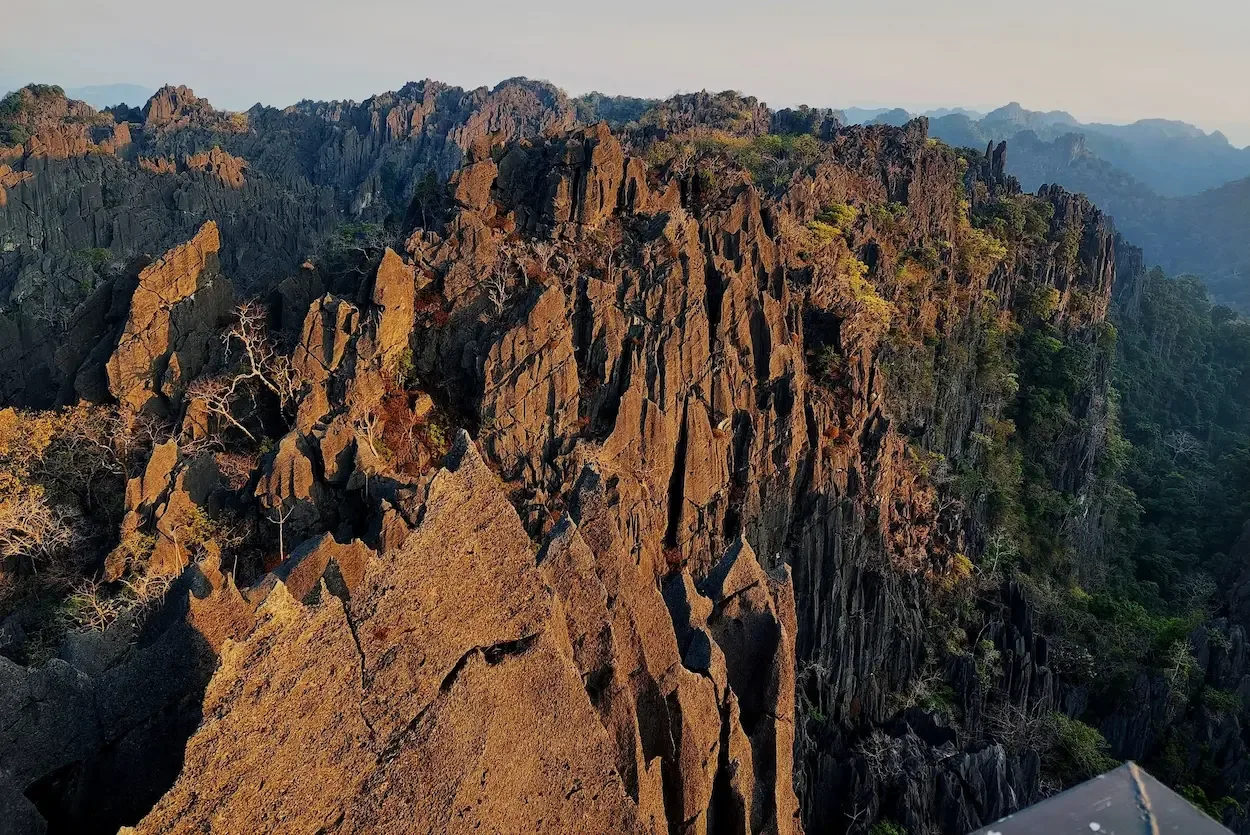 Direct bus, approx 8–9 hrsThakhekThe bus station, the loop that starts here, and the crossing to Thailand.Getting there →
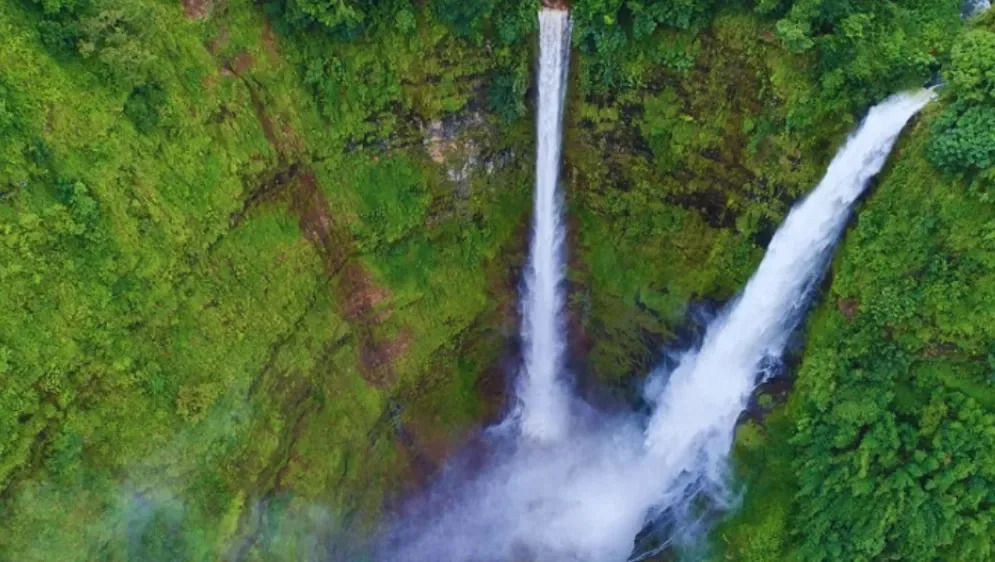 Overnight sleeper, approx 10 hrsPakseThree bus stations by direction, plus Wat Phou, the 4000 Islands and the Bolaven Loop.Getting there →
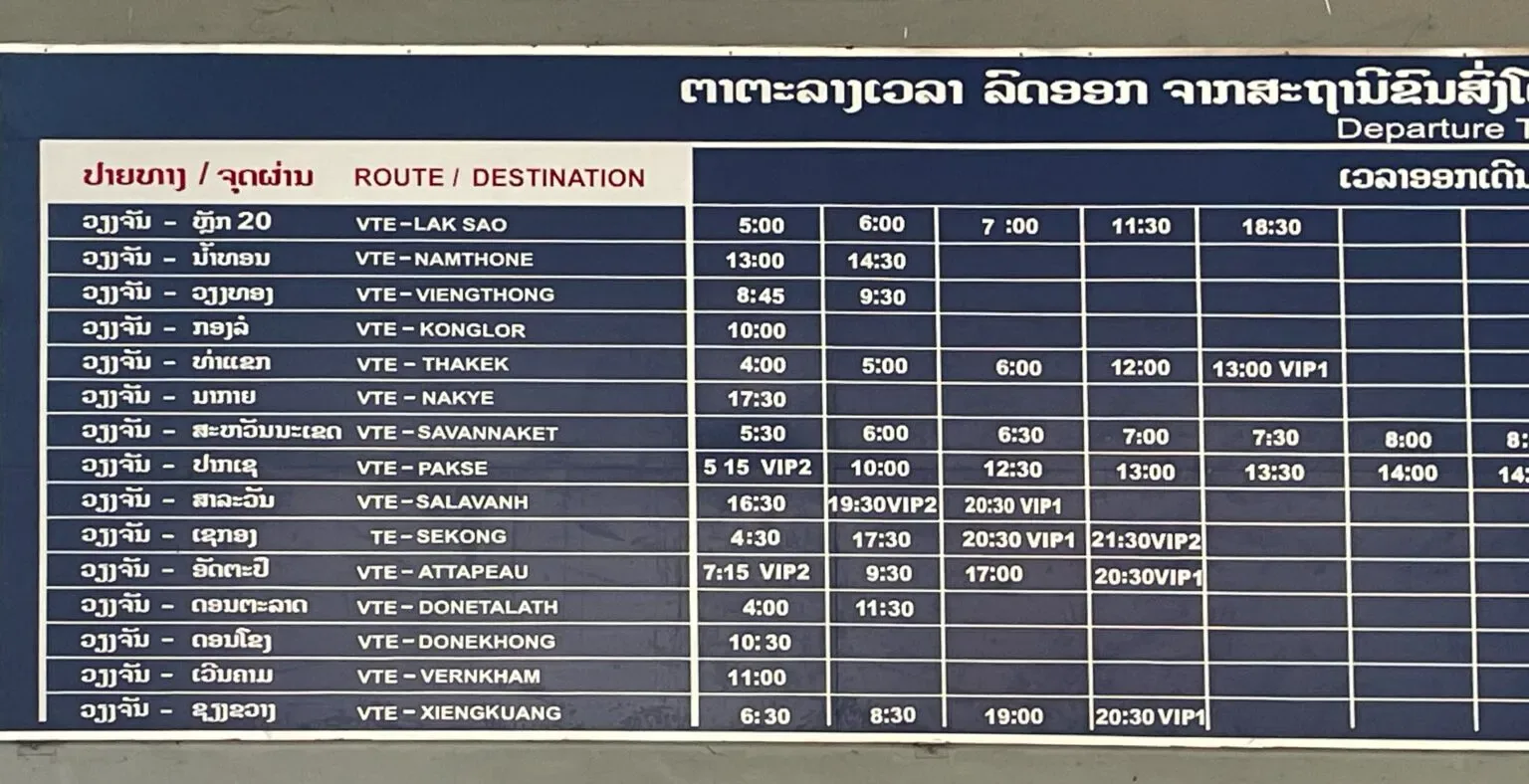
Before you book
Sleeper buses vary a lot between operators. Recent Vientiane–Pakse passengers report short, narrow bunks, especially when shared, and charging sockets that may or may not work. Many buses have no usable toilet on board and make toilet and food stops instead. Check the exact arrival point too, rather than trusting the booking map: some passengers have been dropped at a different stop or in the town centre.

Laos Bus Tickets
Written and maintained from Vientiane. The people behind this site have lived in Laos for two decades and cross these borders themselves. Routes and visa rules get rechecked whenever something changes, not on a fixed schedule that lets stale information sit for months.