VientianeVang Vieng
The gateway to Vang Vieng's karst scenery, and the shortest hop on the Laos–China Railway.

Bus and train · Verified 5 November 2026
Vang Vieng's railway station and bus station are both outside town. From Vientiane the train is fastest; from Luang Prabang the bus is cheapest.
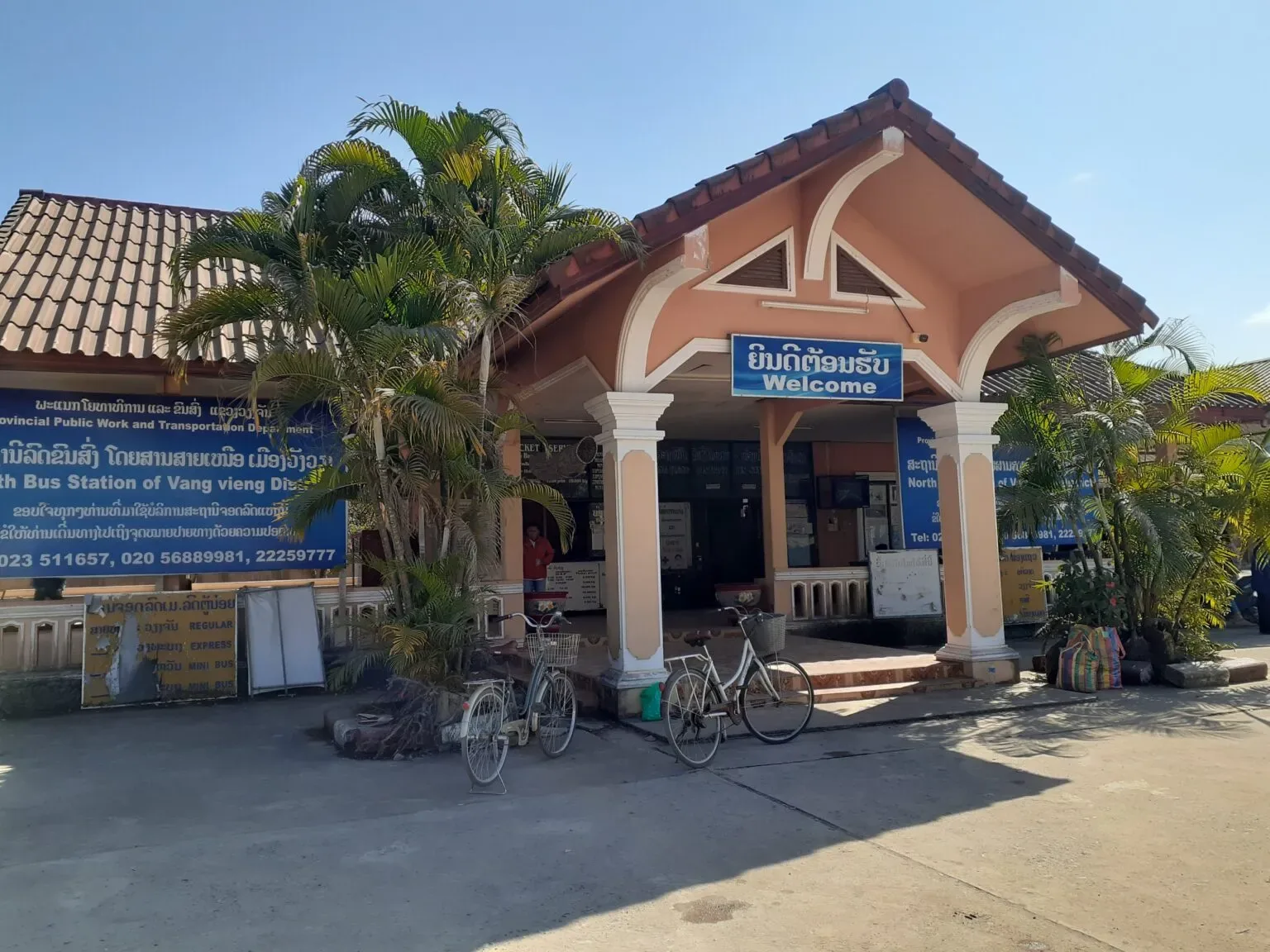
From Vientiane, take the train: about an hour against roughly four hours by road, into the railway station 3 to 4 km north of town. From Luang Prabang, the bus takes about six hours to the bus station about 2 km north on Route 13; the train covers it in about an hour but still needs the same transfers. Either way, budget a tuk tuk into town.
Search Vang Vieng routes
| Station | Distance | Getting into town |
|---|---|---|
| Railway station | 3–4 km north | Minivan or green shared bus, 40,000 kip, or a tuk tuk, about 10 minutes |
| Main bus station | about 2 km north, on Route 13 | Organised tuk tuk approx 10,000 kip per person, or a shared songthaew approx 25,000 kip |
| South Bus Terminal | approx 750 m from the Nam Song toll bridge | Closer in; a short walk or a cheap tuk tuk hop |
Northbound
Southbound
From our daily train timetable, last checked Saturday 7 November 2026, 06:00. Full timetable
People routinely assume the bus station is close because Vang Vieng itself is small. It is not. Budget the transfer into your connection time either way, especially for an early train.
Treat the railway station more like an airport than a train stop: passport and ticket checks come first, then luggage screening, and recent passengers still report aerosols and sharp items being confiscated. The station itself is clean and spacious, with plenty of seating. Arrive about 45 to 60 minutes before departure; shared green minivans and tuk tuks connect it with town.
For the train timetable and fares on both these pairs, see Laos train tickets, which covers Vientiane–Vang Vieng and Vang Vieng–Luang Prabang in full. Coming from the north, the Luang Prabang page says which of its stations you leave from.
The gateway to Vang Vieng's karst scenery, and the shortest hop on the Laos–China Railway.
Links the country's two most-visited towns, with karst scenery continuing most of the way.
There is no direct airport bus to Vang Vieng. The quickest way is the train: a taxi, LOCA or Green SM from Wattay to the Laos–China Railway station, 14–15 km north-east of the centre and on the other side of town from the airport, then about an hour to Vang Vieng and 3–4 km into town.
Allow at least 45 minutes for the first leg, and remember the train seat has to be booked in advance.
By road, it is about four hours to Vang Vieng from Vientiane's Northern Bus Terminal, or by minivan from town. Going the other way to catch a flight, build in both the station transfers and the ride across Vientiane before check-in.
Vang Vieng, about 150 km north of Vientiane, sits among sheer limestone peaks with the Nam Song river running past the town. People come to kayak or float down the river on a tube, explore the caves at the foot of the cliffs, rock climb, and walk out to the Hmong villages nearby. Lao New Year, Pi Mai, in mid-April is celebrated here with plenty of water.
Tham Chang, the town's best-known cave, is just south of town: pay at the gate of the Vang Vieng Resort, cross the bridge over the Nam Song and climb the steps up the cliff. Tham Pou Kham, across the river to the west past Ban Nathong, has a reclining Buddha inside and a cold, deep pool below for a swim; bring a torch. Both stations are outside town, so allow for the ride in first (see the stations).

Laos Bus Tickets
Written and kept up to date from Vientiane by people who have lived in Laos for two decades and take these buses, trains and boats themselves, around the country and across its borders. Each page is checked against Lao government, immigration and operator sources and the news, and the routes it lists are tested online on several dates. We recheck whenever something changes, not on a fixed schedule (how we check things).